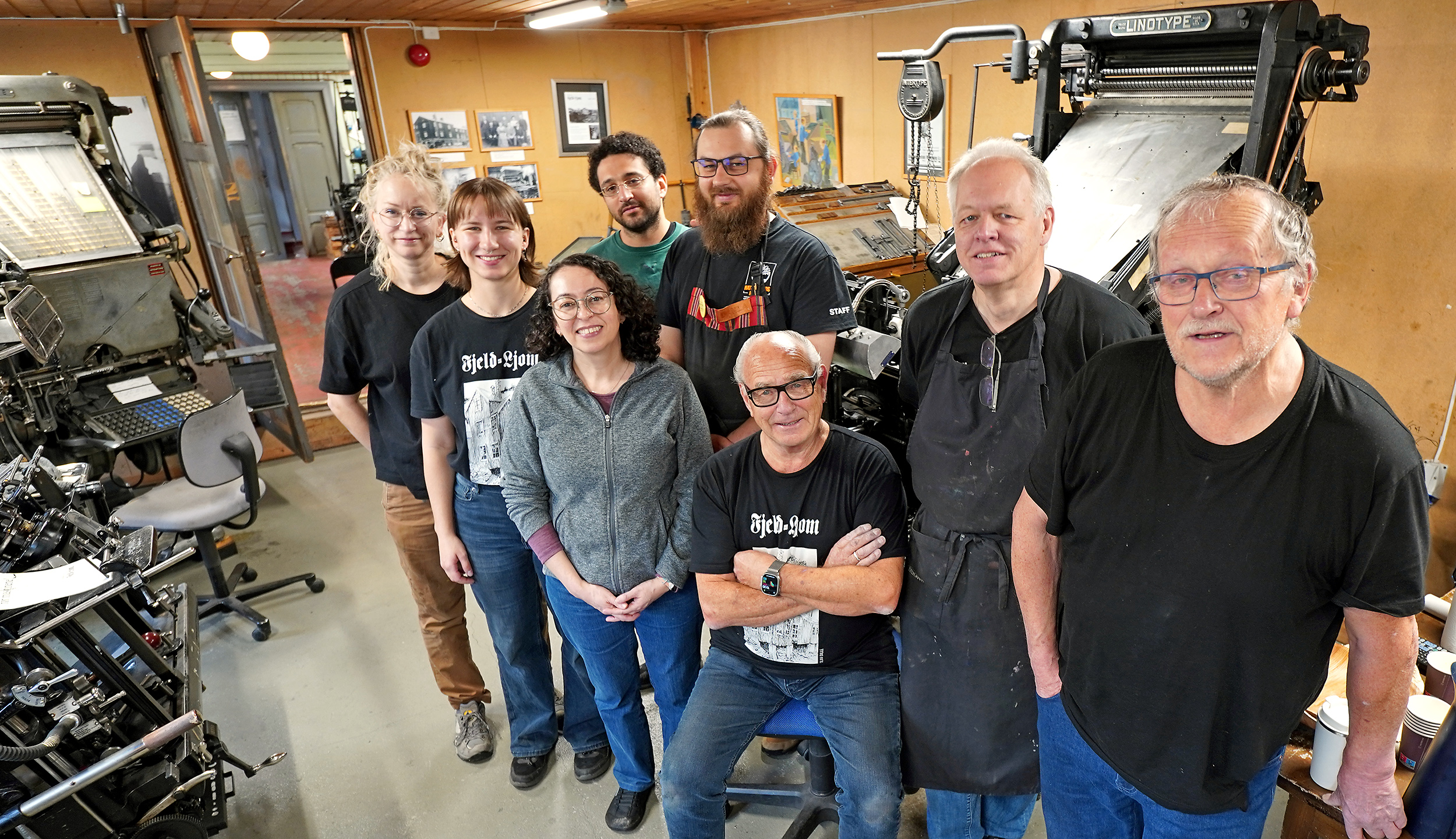
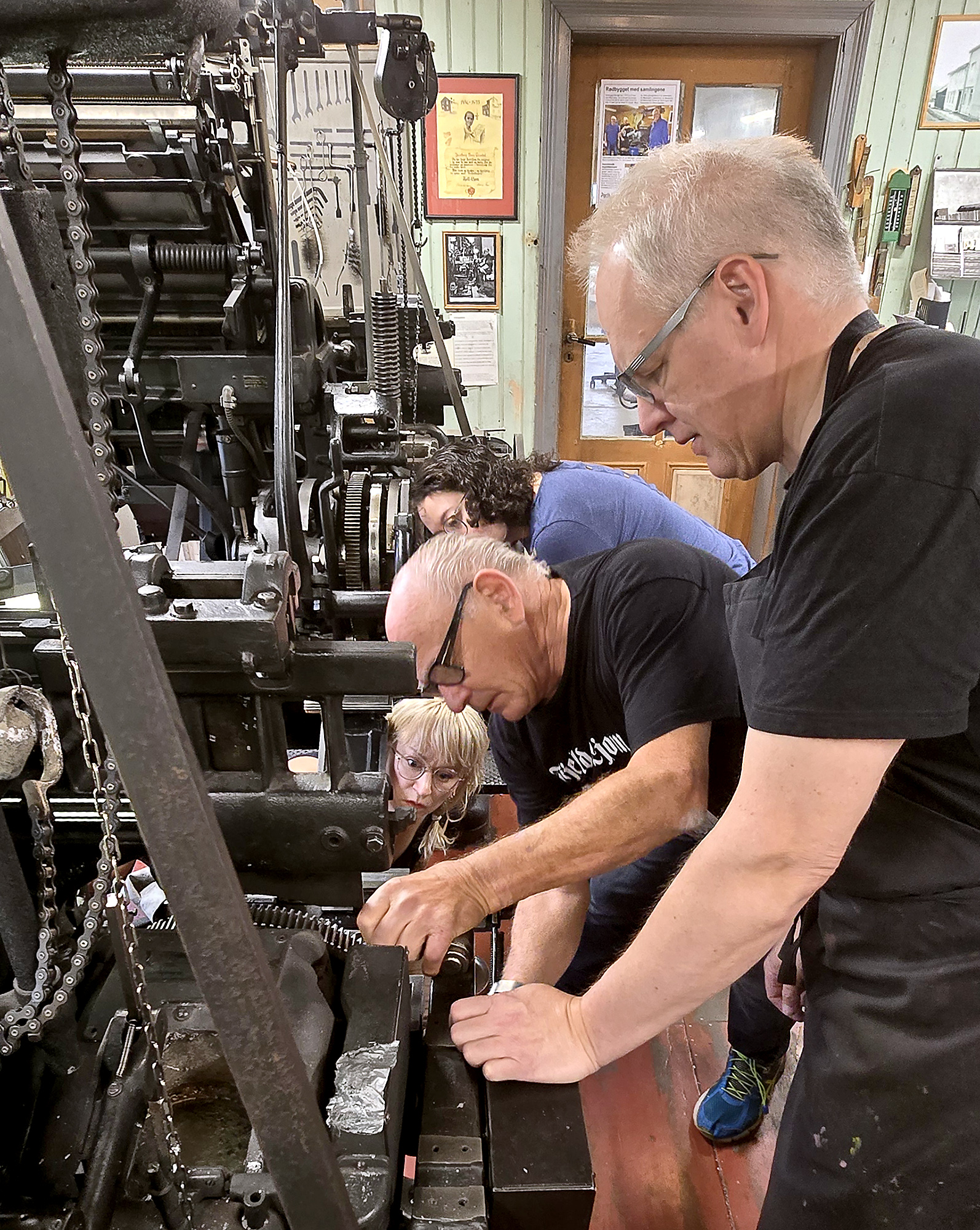
As part of the international collaboration between Fjeld-Ljom, Typa in Estland, friends of Grafiska Museet in Helsingborg and Landeskogen Kunstsanatorium (art sanatorium) we hosted a workshop 7th to 11th of September.
Students and instructors were video documented and also asked to write their own report from the days in Fjeld-Ljom.
Here followes the reports and links to the video interviews.
Hvorfor engelsk?
Vi velger å publisere denne siden på engelsk, slik at den enklere kan bli delt med våre internasjonale samarbeidspartnere. Arbeidet med rekruttering og opplæring i bruk av settemaskiner er noe vi samarbeider med flere land om, og derfor er engelsk det naturlig språket.
Rapportene fra studentene som gjengis er deres egne formuleringer, uten redigering fra vår side.
Kemie Guaida
hi@letradora.com
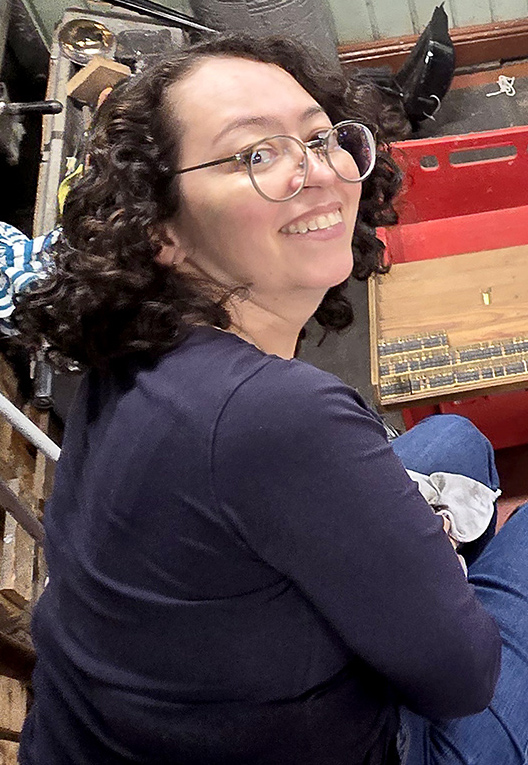
I am a type designer and UX designer based in Sweden. Most of my professional and creative work happens in digital environments, where typography is something I design, adjust and test on screen, in two dimensions, and through computer software. My interest in printing technology, and specifi cally the Røros course, came from wanting to understand more deeply the physical and mechanical history behind the tools and concepts I use every day.
One of the most unique things about the course was learning in a real historical environment. Being surrounded by the machines, tools and methods of an actual workplace, and being able to learn from people who have decades of practical experience in the craft made it an invaluable experience. Being able to work directly with the machines gave me a kind of understanding that would have been impossible to get otherwise.
The student group was also a very important part of the experience. The participants came with diff erent professional backgrounds, areas of knowledge and levels of experience. Sharing their enthusiasm, questions and discoveries made the course feel like we were exploring and discovering the subject together.
On a practical level, I learned how the Linotype machine works as a complete system. I gained experience operating the machine, setting type, understanding the sequence from keyboard input to a fi nished line of type, and knowing what to do when something goes wrong. We also covered basic cleaning, maintenance and troubleshooting.
The course also gave me a new understanding of typographic composition beyond a collection of software settings. Working with Linotype gave me a much deeper respect for the mechanic contraintes and the decisions behind the process. As a UX designer, I was also interested in the way the machines had been designed around workfl ows and needs of people coming from hand composition.
I hope to continue learning and practising at Grafi ska Museet in Helsingborg, and build on what I learned in Røros. I also hope to look for other opportunities to work with Linotype and printing technologies, through future visits to Røros or through other workshops. The course gave me enough practical grounding to continue independently, while also making very clear how much more there is to learn.
I am interested in the relationships between physical and digital typography, between the individual letter and the line of type, and between manual skill and mechanical automation. The experience has given me new directions to explore in my own type design and exploration, and an appreciation of older technologies as ways of thinking about how typography is made.
Achilles Tzallas
I have participated in three Linotype trainings organised by the Hot Type Network, in Leipzig 2024, Tartu 2025, and Røros 2026. This wonderful initiative tackles a long-standing issue in the printing community by ensuring the transmission of linecasting knowledge and thus the longevity of letterpress.
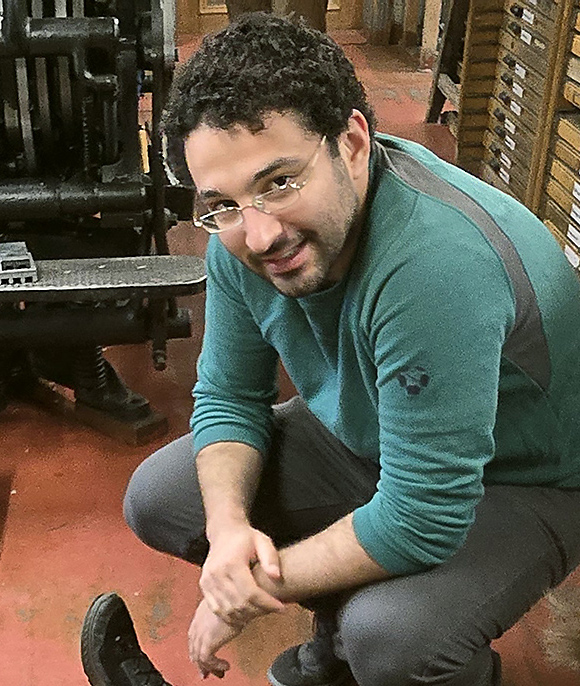
Each and every one of these meetings has been an amazing experience and has gradually given me more and more confidence to operate and maintain linecasters independently. I hope to be able to use that knowledge in Greece and abroad, and transmit it to others.
The chance to learn by doing, surrounded by experienced operators and like-minded enthusiasts, is really unique. More so when this happens in the Pressemuseet Fjeld-Ljom, a rare case where the machines are preserved and operated in situ, just as they were used in production, and for the same purpose: newspaper printing.
I am especially grateful for the superb hospitality in Røros and the chance to explore such a beautiful place, and hope to be back soon, for more Linotype fun!
Anna Ihle
Spending a week in Røros learning about hot type machines, made it possible for me to operate, and to have a general overview of the machines and their history. As an artist, spending more than a year at the printshop at the IDDIS museum in Stavanger, I find it beneficial and inspiring to learn about the hot type machines in their «natural environment», where they have been a part of a production line. Meeting with international peers and former professionals within the newspaper industry is of relevance to my ongoing research and relational artwork «The Typographer» (2025-2027).
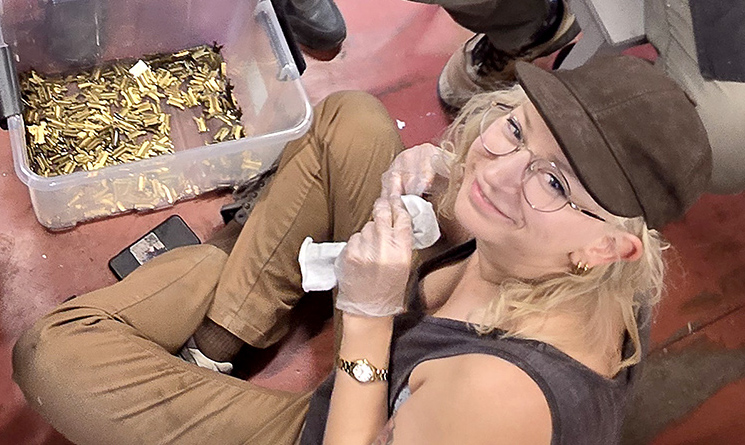
Danila Rygovskiy
I am a collections’ manager at TYPA printing and paper art centre in Tartu, Estonia. As a working museum, TYPA pursuits preservation not only of physical objects and documentation, but also of real skills of the printing trade. Although my role in the museum might seem ‘paper-oriented’, I believe that it is not possible to understand the cultural and historical value of the machines without knowledge of their capabilities and functions.
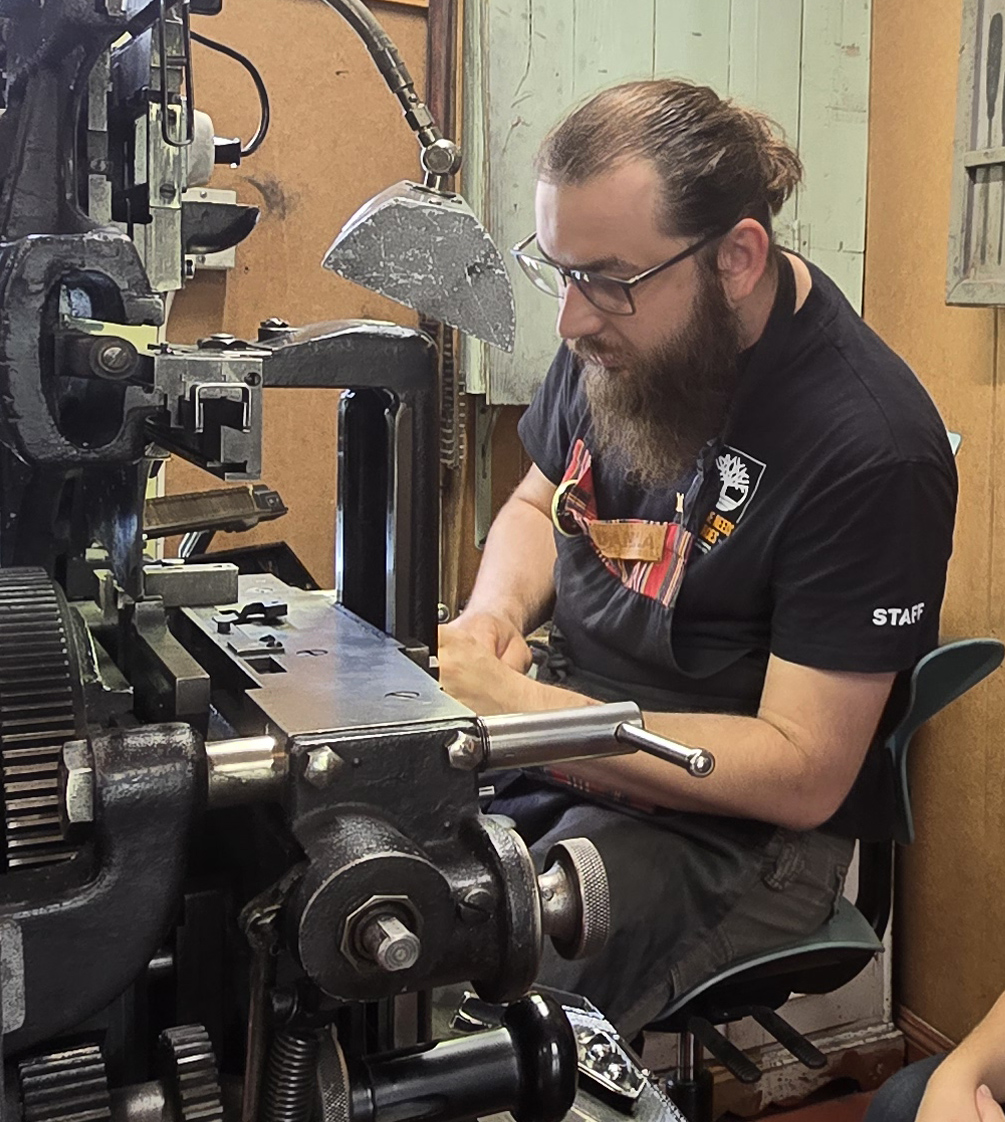
I also think that cultural heritage should be open to everyone, which would be impossible without custodians who can tell stories about printing machines, describe them in articles and be able to use them in museum and artistic practices. Out of doubt, line- and typecasting machines are one of the most important inventions in the printing trade that defined trends of the industry in the 20th century.
Given that, I really appreciate the hands-on approach of the Fjeld-Ljoms press museum in Røros, Norway. This is a newspaper printshop with 2 Linotype and 2 Intertype working machines. The museum still prints a local newspaper once a year, therefore preserving the full cycle of the production, which makes this place unique. First and foremost, it means that all linecasting machines are constantly taken care of, they are not stopped for a too long time, and when apprentices arrive for the training, they are ready to be used by them.
In 2026, the training session in the press museum took place from the 7th to the 11th of September. I did not have any specific text that I wanted to compose. Rather, I was hoping to focus on daily maintenance of machines and possibly some troubleshooting. I was helping other participants, who were operating linecasting machines for the first time, to compose their texts as they had quite big projects for beginners. This allowed me to revise my knowledge and skills as a typesetter and solve problems ‘on the move’, as long as something happened. Combined with maintenance breaks, when we were cleaning spacebands and matrices, changing the line settings and molds, it proved to be a productive approach.
It was my third training session in Røros and fifth in general to practice machine typesetting. I was surprised that not only I remembered many operations, but also gained some useful skills. For instance, I effortlessly could hear when a matrix was not released from a magazine after a stroke on a key or when matrices got stuck in the 2nd elevator. I started ‘feeling’ the machine after using it for a while and could make a distinction between their ‘characters’ – I worked with two, one Linotype and one Intertype. The letter concerned, for example, how much space could be left before sending the line for casting, i.e. was it too tight or too loose. Or which problems could occur in one machine, but would be unlikely in the other. I could also understand which issues I was able to solve myself and when to seek help. This is also important, because you cannot always call for help, you need to know your skills and your limits.
I also want to highlight the importance of the community. We were a very nice and helpful group, ready to share both strictly specific and broad information to each other. All of us had some expertise, not necessarily as machine operators, but as artists, practitioners, cultural workers, which altogether helped understanding the world of printing much better.
That said, I am looking forward to bringing my newly acquired knowledge and skills back to Tartu. I think that the next step would be to use Linotype in my museum: to clean it, to prepare for work, to turn it on, and to explore what we should expect from this machine. Will it be working smoothly or will it break? Will I be able to fix it myself or with the help of the Hot Type Network.
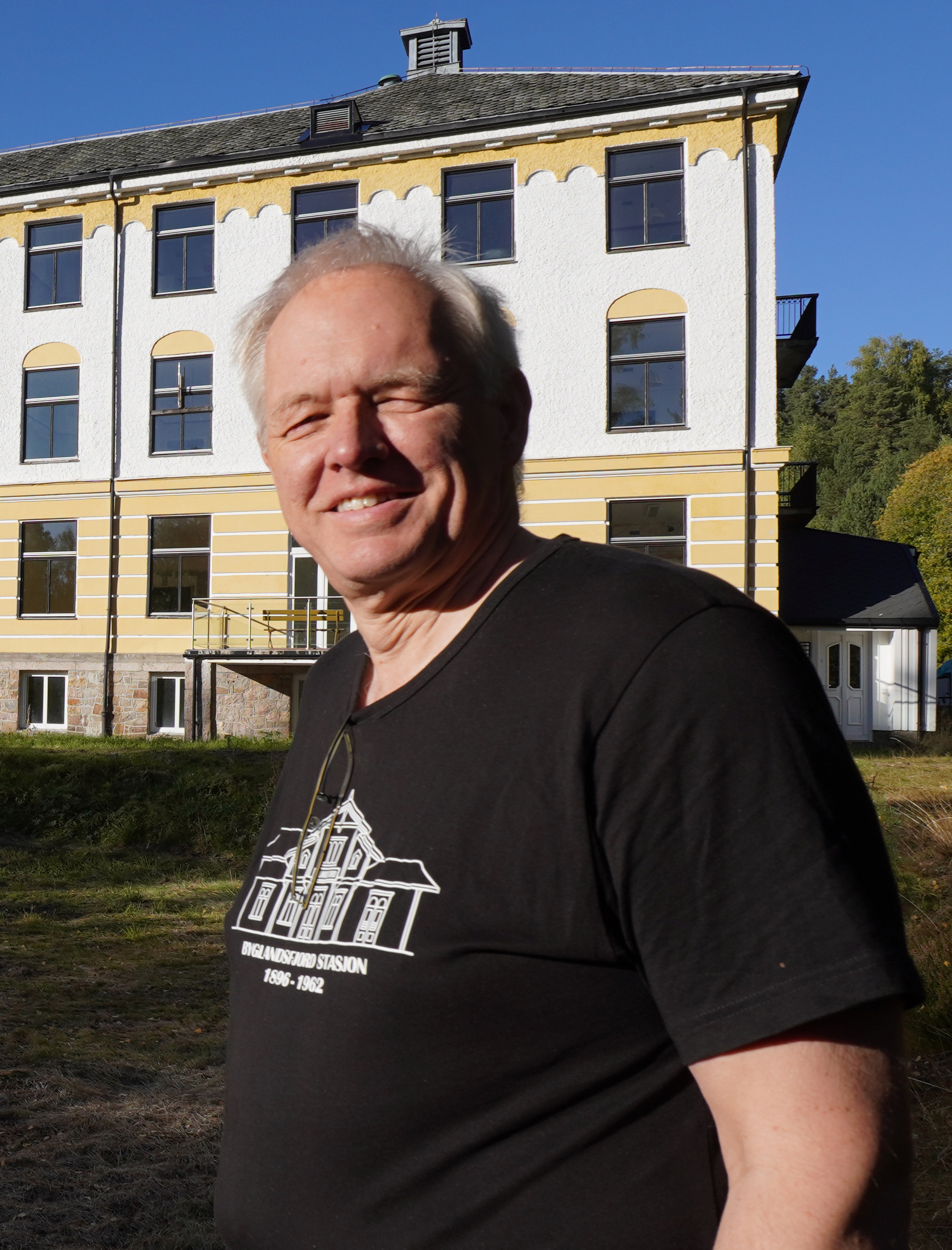
Third instructor was Jens Hystad (80), we made a long interview with him in Norwegian last year:
This training was made possible by the Nordic-Baltic Mobility Programme for Culture which has supported the Hot Type Network.